Home › Cellar tanking in Ilkley
Cellar tanking in Ilkley
Last reviewed
Cellar tanking in Ilkley usually means a slurry or bitumen coating on millstone-grit cellar walls. On Victorian and Edwardian gritstone villas with lime joints and hillside light wells that coating often fails at the reveal, so after survey this practice more often specifies Type C cavity drain rather than another tanking overlay. This page is the tanking-versus-Type-C comparison for Ilkley housing — not a 1930s brick or mill-terrace pattern.
That is a different question from tanking a cellar on millstone grit (what we specify). This page is the comparison on this housing: Victorian and Edwardian gritstone villas, lime joints, hillside light wells — not 1930s brick, not a mill terrace.
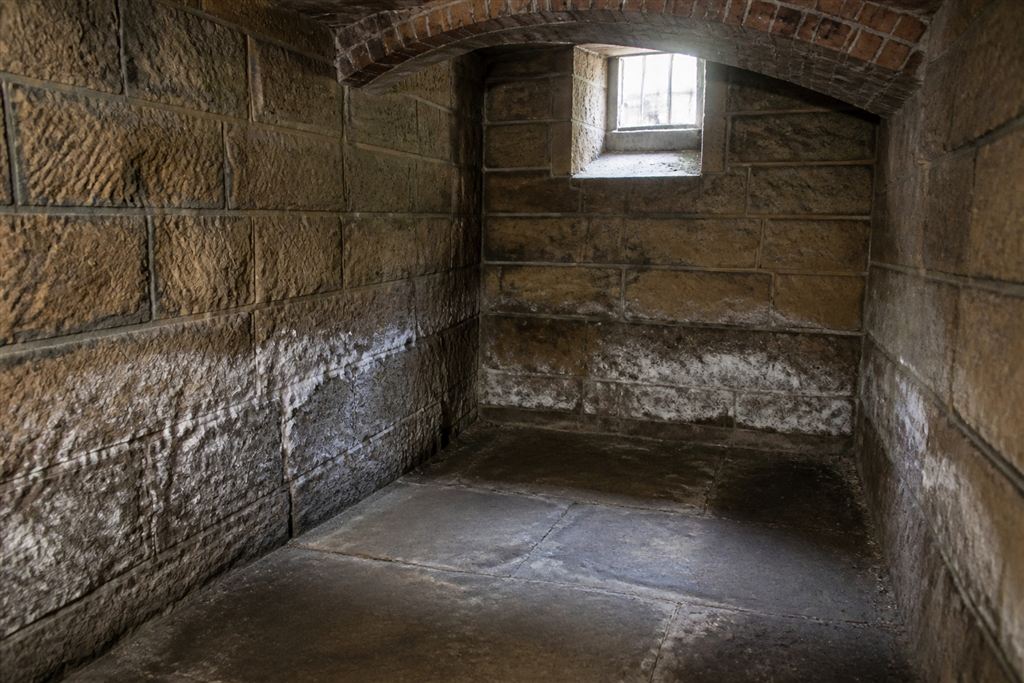
Illustration, not a site photo.
The homeowner phrase vs the system in the room
Cellar tanking, in conversation on Wells Road, covers three very different walls:
| What you can see now | What it usually is in an Ilkley villa | What we do after survey | |---|---|---| | Smooth grey coat, hollow at the light-well reveal, white salts at the flags | Cementitious Type A slurry on millstone grit and lime | Strip the failed coat at the wet zone. Do not overlay and trap moor-runoff moisture against porous sandstone | | Black, sticky, crumbling behind shelves | Old bitumen / tar tanking, often from a late-century “damp” visit | It is not a cavity. It comes off where it has lost bond. We do not stick membrane over tar and call it Type C | | Bare gritstone, damp after rain on the Cow and Calf side, no coat | No previous tanking; perched water in the grit, or a dead light-well drain | Specify Type C if the room is used; do not sell a slurry job because the search phrase said tanking |
Ilkley Cellar Waterproofing does not sell a “cellar tanking service” as a synonym-spin of the other spine page. If the honest spec is cavity drain, we say cellar tanking is the search; Type C is the install. Type C that leaves the stone elevation alone
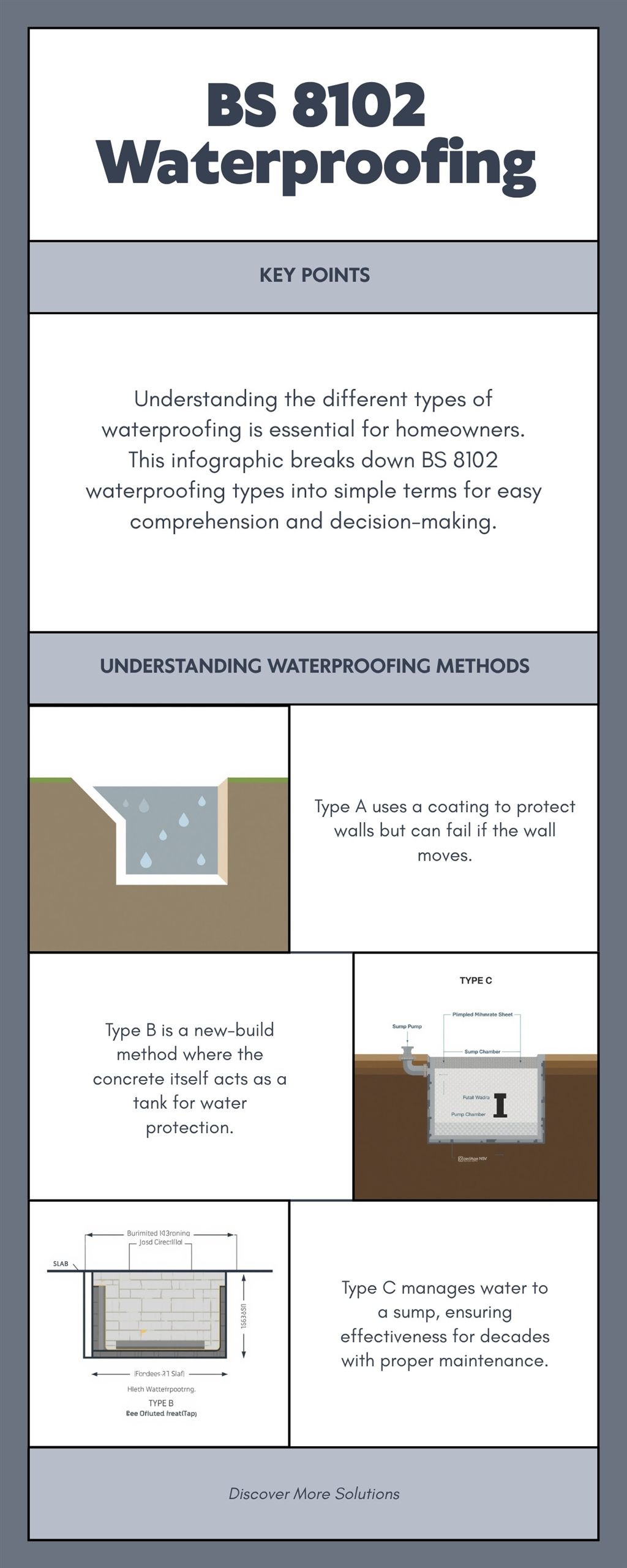
Diagram — BS 8102 types in plain English. Illustrative, not a site photo.
Why slurry fails on this particular stone
Wells Road, Queen’s Road, Parish Ghyll and Cowpasture cellars have:
- millstone grit — coarse, permeable sandstone. Water from Rombalds Moor does not stop at the outer face; it moves through the stone
- lime joints that were meant to breathe. A dense cement face drives moisture sideways into the light-well reveal and the flag floor
- a light well on a stepped plot — a corner slurry never details, and the reveal is where coats blow first
- hillside settlement — a hairline the brittle skin cannot follow, after rain on the moor has already loaded the wall
- salts from the grit crystallising behind the coat until it drums hollow
That is an Ilkley stone problem. It is not “tanking fails on Yorkshire cellars” as a slogan, and it is not a manufacturer diagram rewritten with the town name in.
Overlaying new slurry on old slurry is how you hide the problem until the next wet week on the Cow and Calf. The discovery survey’s job is to say strip or leave, not to sell another coat.
Middleton and the Bridge Lane strip can look similar (a grey coat, a wet floor) and still be Wharfe-side groundwater, not moor runoff. Mixing those two stories is how a specification written for another town fails here.
Type C when “cellar tanking” is what you typed
Cavity drain does not ask millstone grit to become waterproof concrete. Water that arrives after rain on Ilkley Moor is guided to a channel and a sump. That is why it is the default on this stock after a failed Type A coat — and why it can be installed from inside, leaving the gritstone elevation Bradford can see.
Limits, said plainly:
- If the cellar is a dry cupboard under a later Skipton Road house and you only searched the phrase, we will not specify a system.
- If old bitumen is the only lining and the room is a future conversion (common on this stock), stripping and replacing with a drained membrane is recorded now so you do not cut it out later. Conversion after waterproofing
- If the house is on a later estate without a traditional cellar, cellar tanking is the wrong query for that plot.
- If a neighbour already had a conversion by Pure or YDC, their gallery is not a specification for *your* blown reveal. They are real operators; this page still books a survey of this house.
Basement tanking as a supporting mention, not the H1
National searches for basement tanking, what is basement tanking, basement tanking membrane and basement tanking services are larger than the Ilkley modifier . In this town the room is still a cellar under gritstone. We will not retitle this page “basement tanking Ilkley” to chase a shopping SERP for kits. Product rolls of tanking membrane are mentioned so a homeowner knows we specify a system; we are not a merchant.
Tanking a basement cost belongs on the cost page, as ranges for this headroom, light well, and slope.
FAQs
The last firm tanked our Queen’s Road cellar and the light well is wet again — do you overlay?
No. On Queen’s Road / Wells Road millstone grit we open the failed coat, find whether water is moor runoff, a dead light-well drain, or both, and specify a drained cavity if the room is staying in use. Overlaying slurry on slurry is how the last job failed.
Is cellar tanking the same as Type C?
Not in this house. Cellar tanking is the phrase. Type C is the drained membrane and sump. Slurry is Type A. Mixing the words on millstone grit is how people buy another coat that will blow at the reveal.
Can you tank only the wet wall and leave the rest?
Sometimes, on a shallow Ben Rhydding store where one elevation is the problem. A Wells Road villa with a light well and a downhill flag floor is rarely a one-wall job. The survey decides.
Our neighbour’s conversion looks dry — can we copy their tanking?
If that neighbour used Pure, YDC, or anyone else, say so. Their project is real; it is not your invert, your conservation constraint, or your blown cement. We survey this cellar.